I only change motherboards when moving up to the next RAM format or CPU chipset. I stick with AMD due to cost and low thermals, and while their CPU generations shared the same interface I had one mobo for DDR3, one for DDR4, etc.
Can’t wrap my head around constantly upgrading the mobo to be honest. Sure, they have lots of features but I haven’t seen a situation where a mobo would be an upgrade worth doing without also upgrading everything else.
That is part of why I have avoided them, far easier to mix and match AMD stuff to meet my price points since their sockets stick around so long!
Each PC lasts me at least 5 years. I am three or so years on my 5800x3d with a 7090XT I picked up last year and the whole setup will probably still be rocking games past 2030.
The only time I’ve ever done that is during an upgrade chain that results in a motherboard not fitting into the case I need it to. Even then, the last one I bought was from a local used parts shop since I had an Intel 4670k I wanted to slap into a server.
I still got a 4670k in my server. Thought of upgrading in Q1. I can forget all about that now… Unfortunately my mobo is slowly dying, so there’s a limit on how long I can push it.
How often do you upgrade your computer? I do the same but without really trying, it’s literally the case that by the time I start to feel I need a new pc there is already a new CPU socket, often several, and new ram format. I’ve almost never been able to actually reuse stuff. I imagine the only scenario where I could do that would be if some component straight up broke
Maybe every 5 or so years, and generally there has been something worth upgrading the mobo for like new connections for storage. So far it has been when it struggled with 75+ FPS in games that I care about at the settings I want.
Since it is so spread out I can’t say it is a solid pattern, but so far each CPU and mobo upgrade have been together with a new set of RAM and occasionally I get extra RAM in between. Hard drives/SSDs and GPUs are whenever but generally they are years apart too.
Yeah but it’s like the gearbox. While everything’s pulled apart, you may as well swap out the clutch, bearing, and flywheel too because they’ll need replacing again first. Especially if better versions of them are now supported.
because youd only swap mobos for either aesthetics(expensive, not often done) at best because you choose to downsize, or because you need more pci-e I/O.
the average user doesn’t use all their pci-e i/o, and the ones that do, are looking towards workstation motherboards, which is almost a completely different market from the consumer level stuff. It’s a game of, you know when you need more i/o, and if you needed it, you probably would have never bought the consumer level board in the first place.


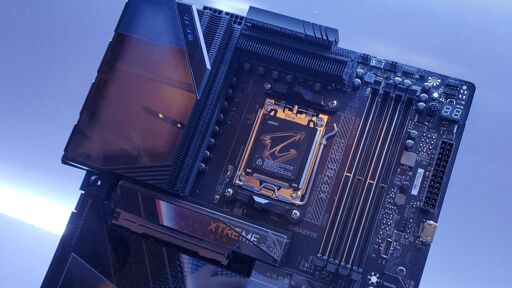
Yeah. This makes pretty good sense. Make some ram and SSDs - lowee the price - and I’m sure Motherboard sales will go up.
It’s funny how people don’t want to buy motherboards without anything else
I only change motherboards when moving up to the next RAM format or CPU chipset. I stick with AMD due to cost and low thermals, and while their CPU generations shared the same interface I had one mobo for DDR3, one for DDR4, etc.
Can’t wrap my head around constantly upgrading the mobo to be honest. Sure, they have lots of features but I haven’t seen a situation where a mobo would be an upgrade worth doing without also upgrading everything else.
Just use Intel CPUs and you’ll understand, as they seem to invent a new incompatible socket every five minutes requiring a new mobo.
That is part of why I have avoided them, far easier to mix and match AMD stuff to meet my price points since their sockets stick around so long!
Each PC lasts me at least 5 years. I am three or so years on my 5800x3d with a 7090XT I picked up last year and the whole setup will probably still be rocking games past 2030.
Hah I just upgraded to that setup at the beginning of the year from a 2017 ryzen 1700 and GTX 1080 build.
It increased the longevity of this system by so much
The only time I’ve ever done that is during an upgrade chain that results in a motherboard not fitting into the case I need it to. Even then, the last one I bought was from a local used parts shop since I had an Intel 4670k I wanted to slap into a server.
I still got a 4670k in my server. Thought of upgrading in Q1. I can forget all about that now… Unfortunately my mobo is slowly dying, so there’s a limit on how long I can push it.
How often do you upgrade your computer? I do the same but without really trying, it’s literally the case that by the time I start to feel I need a new pc there is already a new CPU socket, often several, and new ram format. I’ve almost never been able to actually reuse stuff. I imagine the only scenario where I could do that would be if some component straight up broke
Maybe every 5 or so years, and generally there has been something worth upgrading the mobo for like new connections for storage. So far it has been when it struggled with 75+ FPS in games that I care about at the settings I want.
Since it is so spread out I can’t say it is a solid pattern, but so far each CPU and mobo upgrade have been together with a new set of RAM and occasionally I get extra RAM in between. Hard drives/SSDs and GPUs are whenever but generally they are years apart too.
Yeah but it’s like the gearbox. While everything’s pulled apart, you may as well swap out the clutch, bearing, and flywheel too because they’ll need replacing again first. Especially if better versions of them are now supported.
because youd only swap mobos for either aesthetics(expensive, not often done) at best because you choose to downsize, or because you need more pci-e I/O.
the average user doesn’t use all their pci-e i/o, and the ones that do, are looking towards workstation motherboards, which is almost a completely different market from the consumer level stuff. It’s a game of, you know when you need more i/o, and if you needed it, you probably would have never bought the consumer level board in the first place.