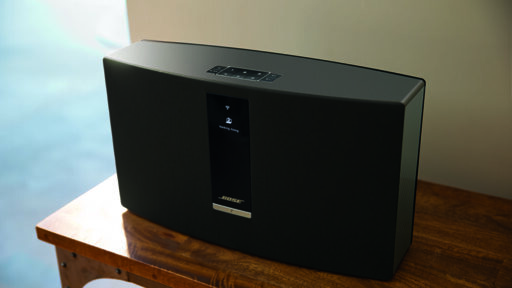
“Open source” really isn’t the right term here, if they’re just releasing API specifications. “Open sourcing” the speakers would be releasing the source code to the software that runs on the speakers.
Like, all of Microsoft’s libraries on Windows have a publicly-documented interface. That hardly makes them open source. Just means that people can write software that make use of them.
Yes, the correct term for this would be “open api”
“documented api”, nothing open about it
Idk, it probably has an open backdoor somewhere
There is a Soundtouch extension to Music Assistant, which which is part of Home Assistant. Last I checked the developer is unsure how functional the wireless speakers will be after the app shutdown.
Indeed it’s misleading wording but credit where credit is due, this is far better than turning them all into e-waste. It’s not like anyone bought these with the assumption they would have any sort of official API someday, especially after seeing how Sonos handled their similar situation…
It’s misleading wording by arse-technica, not Bose. The quoted wording from Nosebis correct and it looks like they’re doing the right thing. After originally announcing they would be dumb speakers, now they’ll continue to be useful and third party apps can continue to use them. Applaud Bose for doing the right thing
Direct your Boos to arse-technica
I appreciate the distinction, but open source is always a spectrum, so I think the description is a reasonable application here.
The source code is private, how can you call that open source?
Bose innovates again by creating “open source” without source, and while keeping everything closed!
but open source is always a spectrum
Is it? I’ve only ever heard “open source” to refer to the source code being released.
Maybe there’s a different term they meant to say other than “open source”
And being under a permissive license. Just making the source available is called source-available.
Permissive license means MIT or Apache2. The GPL or AGPL are also open source but copyleft licenses.
But the source code isn’t available. The source isn’t open. It’s not open-source, by definition.
The “spectrum” you refer to us about how free you are to publicly make use of the code, not whether or not you even have the code.
This situation does not fall inside that spectrum.
open source is always a spectrum
It most definitely is not.
It is a spectrum (MIT vs GPL vs APL for example) but this is outside that spectrum.
That is not a spectrum of open source. They are all open source, as in you can access the source code without restriction. These licenses just limit what you can do with the source code.
Well, yeah. That’s what the spectrum is.
Low end: “you can see the source but can’t do anything with it” (questionable whether this counts as open source at all)
High end “do what you want, it’s literally yours” (public domain).
One can debate where the low boundary of “open source” is, or what makes one license more or less free than another, but the spectrum is the range of limitations.
You’re shitting out of your mouth, son.
Even if it were this would be like saying neon green is greyscale
One could make that argument, but not in this case. Documenting an API has nothing to do with the open source status of the product.
We need a law that companies provide device owners root access for every end of life device.
That’s something the EU would do, but never America.
How about a free gun at the end of life of any device?
NOW we’re talking!
Knowing America, it’d probably be a free round (gun not included) and you’re required to end the life of your device with it.
INB4 companies start making proprietary ammo that only works with their special gun and now they can gouge your money on the tail end of product life.
I think medical device manufacturers should have to support their products for some definite length of time—maybe 10 years?—or not be allowed to make devices at all
This type of laws already exist in some cases, but realistically no one knows that the company won’t just go bankrupt in 5 years. Open sourcing things is a “reasonable” last resort option, or rather, the only viable one
I would love to see that codified: you go bankrupt, you go open source!
I’m not holding my breath though. They usually get bought and sold and scrapped for parts along the way
Medical devices are already supported for a very long time. At least the official ones used in hospitals.
Supported? Maybe. Making sure that it works with the latest technology? No.
I was thinking about implanted devices, e.g. Second Sight https://www.bbc.com/news/technology-60416058
For software too, if a company has sold software and then goes out of business, it should have to give all licensed users permanent access to use it. Preferably also the source code. (Ideally we’d have open source options for everything but that’s not always practical or possible right now.)
deleted by creator
GrapheneOS is your savior. I should donate, their work is only getting harder.
deleted by creator
They’re working on that, too.
It would be one thing for a corporation to misuse the term open source as they’ve been doing lately. It’s pretty bad for one of the biggest and oldest tech news sites to be doing it.
More like ArseTechnica, eh?
deleted by creator
You sound like an extremist brother. If they lie and dont do it (seems like they already have made it open-source) then get mad. But it sounds like you are upset because you got screwed by Sonos and Bose actually are attempting to do the right thing for their customers.
Thing is they didn’t actually open-source it, as stated in other comments. They just released the api documentation. While, yes, it is a step in the correct direction, it is definitely not open-source. Open source would be releasing the source code for all the software involved, which they haven’t done.
I wasn’t affected by the Sonos App fiasco because I don’t use it. I mostly use the speakers through Spotify, and occasionally through Home Assistant. I only need the app to set my wake schedule but once it was done, I didn’t need to go back.
Won’t this allow the same? With the API, you should be able to continue using your speakers with local automation, assuming someone wants to implement that.
deleted by creator
That kinda sucks, especially since even the older ones work with Home Assistant etc directly now
Not without internet access and Sonos cloud servers, it doesn’t…
I think that the cloud system might be needed to initially pair the speaker to a network+account, but apart from that no. The speakers in my media network are not allowed Internet access.
deleted by creator
Basic documentation does not equal open source.
Toaster ovens from 40 years ago did better. They came with a technical diagram.
We need to start demanding technical diagrams again. I’ve fixed up antiques where the schematics were printed on the inside, even for a simple flashlight.
But that means you’ll repair it rather than just buying another. We can’t have that! Think of the GDP!
That’s a pretty cool thing to do
They didn’t open source anything.
Yes, but at least documenting the API and saying “have at it” is better than dropping it
The headline is still misleading.
And they didn’t do it. The headline is misleading.
PDF reference of the API here: https://cdn.arstechnica.net/wp-content/uploads/2026/01/2025.12.18-SoundTouch-Web-API.pdf
Is there any quality, real open-source speakers? Or it’s way better not bother with it and get dumb speakers and an SBC?
I don’t use OpenHAB or Home Assistant, but I’d be extremely surprised if they don’t have existing functionality for connecting microphones, speakers, and LLMs to set up voice-controlled stuff.
searches
Willow Is a Practical, Open Source, Privacy-focused Platform for Voice Assistants and Other Applications
Willow is an ESP IDF based project primarily targeting the ESP32-S3-BOX hardware family from Espressif. Our goal is to provide Amazon Echo/Google Home competitive performance, accuracy, cost and functionality with Home Assistant, openHAB and other platforms.
100% open source and completely self-hosted by the user with “ready for the kitchen counter” low cost commercially available hardware.
https://rhasspy.readthedocs.io/en/latest/
Rhasspy (ɹˈæspi) is an open source, fully offline set of voice assistant services for many human languages that works well with:
For passive, and even now some active loudspeakers, very much so.
Links for passives: https://sites.google.com/site/undefinition/diy https://www.zaphaudio.com/ https://www.madisoundspeakerstore.com/speaker-kits/ (etc)
Active speakers are usually things like this and use commercially available parts with commercial software. But if you want you can build a DIY DSP and DAC and DIY amplifier. Note that there are tons of other designs for both available.
The DIY audio community is very vibrant. There are tons and tons of forums collaboratively iterating. You can build DIY headphones and DIY headphone amplifiers. Hell, you can even build DIY speaker drivers.
Anything I missed was not an intentional omission, lol.
Chad Bose.
They’re never getting those integrations back though, e.g. Spotify. Those are usually implemented in each company’s servers rather than something that can be brokered locally through an API. That needs to change
No.
That’s fantastic. Can Apple Pay attention to this?