

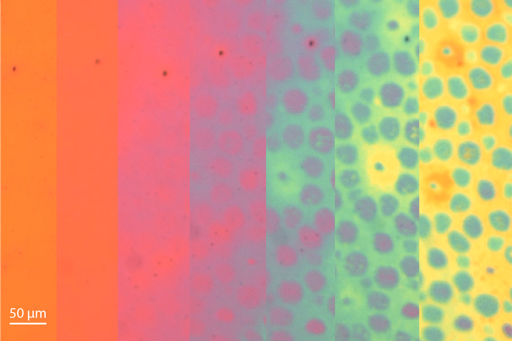
To create dynamic textures in a flexible material, the researchers combined a patterning technique called electron-beam lithography, which is typically used in advanced semiconductor manufacturing, with a polymer film that swells as it absorbs water. By firing a beam of electrons at the film, they were able to adjust how much certain areas of the material would swell, creating detailed patterns that only revealed themselves when the film was wet.
To my reading it sounds like the color change is brought about by introducing raised microstructures on the material? Which… I’m not quire sure I understand how that can work, but that’s fascinating if I’m understanding it correctly. I would have expected the shapes to be too indistinct to be useful in producing that effect.
Varying levels of refraction. That’s how rainbows work.
familiar with the concepts here, I just I don’t understand how refractive patterns can be formed in this material with the mechanism they’re describing - its easy to etch them in, but it seems like it would lack the definition needed if it’s fluid swelling forming them via the etched patterns. I haven’t had a chance to give the paper a proper read though.