

I’ve resisted immutable distros if only because I felt it wasn’t “how linux should be.” That’s probably not even my view because I’ve only used Linux for 3 years, so I’m not some greybeard. I think its been an attitude in online Linux circles that I read and kind of got morphed into.
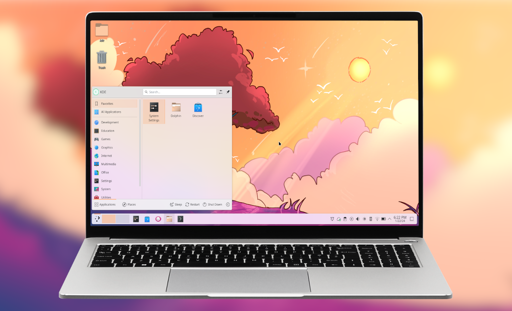
Today I decided to try KDE Linux. Its still in alpha, so I’m sure I’ll find rough edges, but so far I can do everything I would do on my previous Arch system.
I know with snapper/timeshift you can have the same sort of stability as if you were running an immutable, but it always stresses me out to have a system that can crash. This is all in my head as well because I never had an update mess up my Arch install.
Besides relying on flathub a bunch, everything seems the same, except its an atomic desktop. I’m guessing I’ll struggle with some CLI programs, but I can probably use brew for those. I’m also by no means a power user. I’m a regular user. Use the web, watch videos, music, some games. So I don’t know why I thought I needed access to my core system at all times, even when I never used it.
Anyone else dipping into immutable now that they’ve been around a while? Anyone trying the KDE linux distro?
I think the main reason is experience on a distro with a crappy package manager that can easily result in a damaged or even unbootable system. Some of the most popular and even reportedly “stable” distros fall into this category.
You can think of an immutable distro as a system that treats the entire core OS as a single package. As long as you have that installed, it will boot.
I have broken and repaired many distros in the past and most package managers were able to handle it.
This is why I always keep the last 3 installed package versions around.
In Arch based distros you have to install downgrade. Idk why it doesn’t come with the base pacman tools, as it can seriously save your ass.
The most resilient package manager I found to be dnf. I once messed up an upgrade from Fedora 20 to 21 or something and many packages were 20, some were 21 and some were rawhide. Boy did I think I needed to fix this manually. I fixed the misconfiguration, made internet available in a root shell and dnf magically repaired every dependency hell I found myself in.
Fedora is now my work desktop and Arch with snapper runs on my personal devices.
Immutable distros or things like NixOS seem fine if idiots need to use them. However, I’m not an idiot and usually don’t give idiots root rights.
If you want your system simply to work and never customise it beyond what the maintainers thought out for you, NixOS and Silverblue etc. might be cool. But for me there always was a point where I had to do hours of work thinking “good Lord Linus the Creator, this would be so much easier with a regular distro”.
Went so far to ragequit NixOS three times now and everyone who uses it nowadays gets the same look as these weaboo Arch supremacists way back when. Maybe NixOS is good in 10 years but at the current rate, I’d just burn the project honestly. So wasteful, both for the environment and man hours.
I didn’t realise that could happen, I mean, I’ve never experienced something like that myself. Having said that, I did specifically choose Fedora because it’s a ‘famous’ distro and I’d want it to be as stable as possible.