

I’ve resisted immutable distros if only because I felt it wasn’t “how linux should be.” That’s probably not even my view because I’ve only used Linux for 3 years, so I’m not some greybeard. I think its been an attitude in online Linux circles that I read and kind of got morphed into.
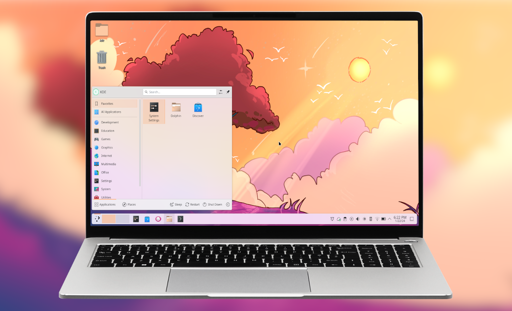
Today I decided to try KDE Linux. Its still in alpha, so I’m sure I’ll find rough edges, but so far I can do everything I would do on my previous Arch system.
I know with snapper/timeshift you can have the same sort of stability as if you were running an immutable, but it always stresses me out to have a system that can crash. This is all in my head as well because I never had an update mess up my Arch install.
Besides relying on flathub a bunch, everything seems the same, except its an atomic desktop. I’m guessing I’ll struggle with some CLI programs, but I can probably use brew for those. I’m also by no means a power user. I’m a regular user. Use the web, watch videos, music, some games. So I don’t know why I thought I needed access to my core system at all times, even when I never used it.
Anyone else dipping into immutable now that they’ve been around a while? Anyone trying the KDE linux distro?
The concept is attractive.
Since back before “atomic” and “immutable” were fashionable buzzwords, I’ve had a few Alpine installations running something like this. Their installer supports it. https://wiki.alpinelinux.org/wiki/Immutable_root_with_atomic_upgrades
I guess I’m also not alone in having been running OpenWrt with atomic upgrades for many years.
Since then been running a ublue fork (Aurora) for a while now. Forking it and running the builds on my own infra instead of relying on their GitHub works after hacking up the workflow files but it’s quite redudandant and inefficient with IMO one too many intermediate layers (kinoite -> akmods -> main -> aurora/silverblue/bazzite -> iso) downloading the same things multiple times repeatedly despite spending considerable overhead on caching. It’s clear that building outside of their GitHub org is not really actively supported.
Also tried openSUSE microOS (Aeon) a year or two back for a while. I want to like it but find zypper and transactional-update pretty uncomfortable and TBH sometimes still confusing to work with. Installing it on encrypted RAID was daunting IIRC. Rough edges. Enough out-of-date docs on the official site to make Debian wiki look like ArchWiki in comparison.
KDE Linux looks promising but it was still in a very early and undocumented stage last I looked. Great to see the progress.
More recently been looking more at Arkane Linux and been using it for some months now. It’s an immutable with Arch base. Much easier to customize and maintain than the ublue options and a lot less time spent triggering and waiting for builds - while having less stuff pulled from third-party servers in the process and an easy way to fork packages by cloning and submoduling an AUR repo. Lot more straightforward to make work without relying on GitHub. If you’re looking at rolling your own builds and are comfortable with Arch, I highly recommend checking it out. My fav so far.
https://arkanelinux.org/
https://codeberg.org/arkanelinux/arkdep
Given the self-contained nature of Debian - cloning the Debian sources is enough to do a complete offline build of everything - I think it’d be the most interesting base for a sustainable immutable distro unless you go to the opposite end with “distroless” (no comment). Looking forward to one.
Arkane looks very cool. Will have to look into it.