

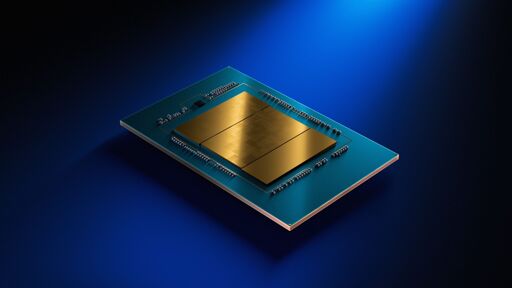
China has begun mass production of next-generation processors based on molybdenum disulfide instead of traditional silicon semiconductors[1]. According to Professor Li Hongge’s team at Beihang University, these chips merge binary and stochastic logic to achieve better fault tolerance and power efficiency for applications like touch displays and flight systems[2].
The breakthrough came through developing a Hybrid Stochastic Number (HSN) system that combines traditional binary with probability-based numbers[2:1]. This innovation helps overcome two major challenges in chip technology - the power wall from binary systems’ high energy consumption, and the architecture wall that makes new non-silicon chips difficult to integrate with conventional systems[2:2].
I’m beginning to get the impression you don’t actually understand what the term economics of scale means.
Then enligthen me.
I’ve already explained the dynamic numerous times in this very thread.
Sure but no proof an no sources. Come on man it can’t be that hard to find.
Proof and sources for what specifically?
Lol. You are trolling me right? What have we been talking about?
U need sources on how/why economies of scale work, and how supply chains evolve?
Sure because apparently I do not understand how it is able to beat the laws of physics.
Oh right, the famous laws of physics that apparently decree silicon must forever be the cheapest material. Let me check my physics textbook real quick. Yep, still says nothing about global supply chains and sixty years of trillion-dollar investment being a fundamental force of nature.
Silicon is cheap because we made it cheap. We built the entire modern world around it. We constructed factories so complex and expensive they become national infrastructure projects. We perfected processes over many decades. That’s not physics, that’s just industrial inertia on a planetary scale.
To claim nothing else could ever compete requires ignoring how technological progress actually works. Remember when aluminum was a precious metal for royalty? Then we figured out how to produce it at scale and now we make soda cans out of it. Solar panels, lithium batteries, and fiber optics were all once exotic and prohibitively expensive until they weren’t.
As you yourself pointed out, germanium was literally the first transistor material. We moved to silicon because its oxide was more convenient for the fabrication tricks we were developing at the time, not because of some cosmic price tag. If we had poured the same obsessive investment into germanium or gallium arsenide, we’d be having this same smug conversation about them instead.
Similarly, graphene isn’t too expensive because physics. It’s too expensive because we’re still learning how to make it in bulk with high quality. Give it a fraction of the focus and funding that silicon has enjoyed and watch the cost curve do the same dramatic dive. The inherent cost argument always melts away when the manufacturing muscle shows up.
The only real law at play here is the law of economies of scale. Silicon doesn’t have a magical property that makes it uniquely cheap. It just has a sixty-year head start in the world’s most aggressive scaling campaign. If and when we decide to get serious about another material, your physical laws will look a lot more like a temporary price tag.