

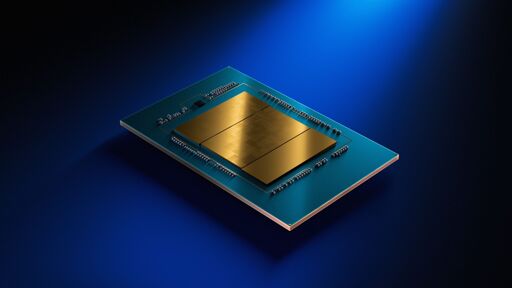
China has begun mass production of next-generation processors based on molybdenum disulfide instead of traditional silicon semiconductors[1]. According to Professor Li Hongge’s team at Beihang University, these chips merge binary and stochastic logic to achieve better fault tolerance and power efficiency for applications like touch displays and flight systems[2].
The breakthrough came through developing a Hybrid Stochastic Number (HSN) system that combines traditional binary with probability-based numbers[2:1]. This innovation helps overcome two major challenges in chip technology - the power wall from binary systems’ high energy consumption, and the architecture wall that makes new non-silicon chips difficult to integrate with conventional systems[2:2].
so, if i understand this correctly, it can do stuff like fast and cheap imprecise arithmetic of floating point numbers by doing something like converting the signal to a continuous (non-binary) voltage, then doing some analogous circuitry, then converting the signal back to digital?
It seems to be an AI accelerator. Without reading the source, to me seems that that’s the game. Interesting.
yeah because AI does a lot of floating-point calculations, and precision is famously not very important there (i.e. google replaced all floating point numbers in their AI models with 8-bit precision fixed-point numbers and the performance is just as good).