It lowers the upfront cost which is what millions of financially illiterate people think of first. $299 biweekly for 96 months! That’s $20 cheaper than XYZ
Never you mind how much extra it costs for radio or heated seats or the horsepower on the sticker.
It won’t work for so many millions when Chinese cars are skyrocketing, competing on price with them is crazy.
Combustion engines require advanced engineering, but electric ones are absolutely basic, we must look for another element that differentiates these brands, I would pay more for good open source and auditable privacy software that I know is not going to leave me stranded at the first opportunity.
The problem is that not enough people care about privacy, but it’s a valid approach. Just need to market it.
One of the challenges I think are the things you can’t notice until you live with a car. How much space does the seat heater actually heat? My old BMW heated quite far up the backrest while Japanese and Korean cars barely warm the lumbar area (and cycle on/off leaving you hot/cold respectively).
How good is the traction control? I have driven GM products shipped on this side of 2020 that only do torque limiting and the abs doesn’t seem to do pay any attention to the rear wheels. The system is very similar to 1980s functionality. Compared to a 2000s smart car, it’s downright dangerous.
Does the HVAC work? I’ve had a Subaru (2014) that couldn’t heat or couldn’t cool the car, without having the fans on above normal speaking level (in fact it couldn’t cool the car at 25°C without recirculate on); my BMW on the other hand moderated heat output, heated seats, and heated mirrors based on the outdoor temperature; it was exceedingly comfortable. I never needed to adjust the climate controls.
The cheaper cars have the “features” but the implementation is crappy. It costs money to finesse.
The problem is that most people (as with privacy) don’t notice this. They may note the absence of the small luxuries if they change cars, but it’s difficult to market it, difficult to convince people to spend more on it, and difficult to include in press reviews without being a huge nerd.
If it’s already built into the car the car won’t be any less expensive just because the features is locked behind a subscription.
Even if you don’t buy the subscription, you already payed for the feature since they already built it into your car. They didn’t do that for free and hope that you pay for it later.
It’s a lot cheaper for OEMs to just manufacture one SKU (a car with all the hardware) than to have a bunch of different options. Now, wether or not they pass those savings to the consumer, I have my doubts
They didn’t do that for free and hope that you pay for it later.
That is, in fact, the business model.
Cars already are wired for many features or have software gates on them. For decades now, they’ll run the wire for a rain sensor but not include the sensor, because it’s more expensive to have two parts for the harness than to not hook it up. Or they’ll include the full hardware requirements for GPS but it’s gated in software. You can go to the dealer, pay $1000 and get navigation turned on.


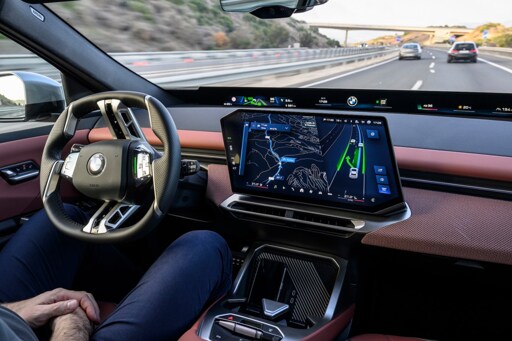
oh yes, surely that idea helps them compete with Chinese cars, this is what they are going to add value to and justify their price
It lowers the upfront cost which is what millions of financially illiterate people think of first. $299 biweekly for 96 months! That’s $20 cheaper than XYZ
Never you mind how much extra it costs for radio or heated seats or the horsepower on the sticker.
$600 a month for 8 years. For a car. Plus a $99 subscription on top.
JFC
I’m with this guy
https://www.youtube.com/watch?v=sPjNFp0diWE
Insane economics.
What’s the saying? Only poor people can afford “cheap” shoes? (Though cheap at $600/month is doing a lot of work there)
Fuck that.
Gimme that indestructible Japanese shitox any day of the week and twice on Sundays.
https://en.wikipedia.org/wiki/Boots_theory
It won’t work for so many millions when Chinese cars are skyrocketing, competing on price with them is crazy. Combustion engines require advanced engineering, but electric ones are absolutely basic, we must look for another element that differentiates these brands, I would pay more for good open source and auditable privacy software that I know is not going to leave me stranded at the first opportunity.
The problem is that not enough people care about privacy, but it’s a valid approach. Just need to market it.
One of the challenges I think are the things you can’t notice until you live with a car. How much space does the seat heater actually heat? My old BMW heated quite far up the backrest while Japanese and Korean cars barely warm the lumbar area (and cycle on/off leaving you hot/cold respectively).
How good is the traction control? I have driven GM products shipped on this side of 2020 that only do torque limiting and the abs doesn’t seem to do pay any attention to the rear wheels. The system is very similar to 1980s functionality. Compared to a 2000s smart car, it’s downright dangerous. Does the HVAC work? I’ve had a Subaru (2014) that couldn’t heat or couldn’t cool the car, without having the fans on above normal speaking level (in fact it couldn’t cool the car at 25°C without recirculate on); my BMW on the other hand moderated heat output, heated seats, and heated mirrors based on the outdoor temperature; it was exceedingly comfortable. I never needed to adjust the climate controls.
The cheaper cars have the “features” but the implementation is crappy. It costs money to finesse.
The problem is that most people (as with privacy) don’t notice this. They may note the absence of the small luxuries if they change cars, but it’s difficult to market it, difficult to convince people to spend more on it, and difficult to include in press reviews without being a huge nerd.
If it’s already built into the car the car won’t be any less expensive just because the features is locked behind a subscription.
Even if you don’t buy the subscription, you already payed for the feature since they already built it into your car. They didn’t do that for free and hope that you pay for it later.
It’s a lot cheaper for OEMs to just manufacture one SKU (a car with all the hardware) than to have a bunch of different options. Now, wether or not they pass those savings to the consumer, I have my doubts
That is, in fact, the business model.
Cars already are wired for many features or have software gates on them. For decades now, they’ll run the wire for a rain sensor but not include the sensor, because it’s more expensive to have two parts for the harness than to not hook it up. Or they’ll include the full hardware requirements for GPS but it’s gated in software. You can go to the dealer, pay $1000 and get navigation turned on.