

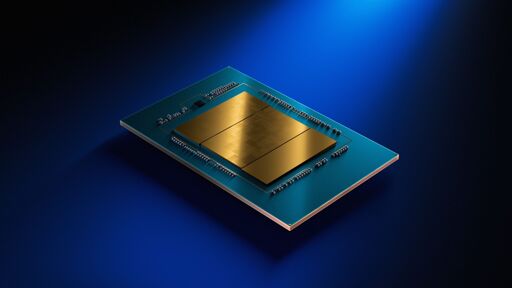
China has begun mass production of next-generation processors based on molybdenum disulfide instead of traditional silicon semiconductors[1]. According to Professor Li Hongge’s team at Beihang University, these chips merge binary and stochastic logic to achieve better fault tolerance and power efficiency for applications like touch displays and flight systems[2].
The breakthrough came through developing a Hybrid Stochastic Number (HSN) system that combines traditional binary with probability-based numbers[2:1]. This innovation helps overcome two major challenges in chip technology - the power wall from binary systems’ high energy consumption, and the architecture wall that makes new non-silicon chips difficult to integrate with conventional systems[2:2].
Without substantiating? I linked a Wikipedia article as a source, which explains quite a lot of the reasoning for choosing silicon.
The only thing that you reiterate here is economics of scale and you haven’t provided any source that substantiates that there are other materials where the economics of scale might lead to a better and/or cheaper product.
I’m beginning to get the impression you don’t actually understand what the term economics of scale means.
Then enligthen me.
I’ve already explained the dynamic numerous times in this very thread.
Sure but no proof an no sources. Come on man it can’t be that hard to find.
Proof and sources for what specifically?
Lol. You are trolling me right? What have we been talking about?
U need sources on how/why economies of scale work, and how supply chains evolve?
Sure because apparently I do not understand how it is able to beat the laws of physics.