Which text editor do you use?
Kate
Kwrite
when I use kde I prefer to use this edit too
Came here to say kate! I tried a bunch of them before but kate is nice :3. And then I have nano for the terminal
Kate is by far the best GUI text editor I ever used. And unless it’s a short config file and I use nano, I want GUI. It’s not the 80s anymore!
It’s not the 80s anymore, thus I want a good TUI over GUI any day
The only sad thing about Kate? No terminal version of this beauty.
It has a few quirks I utterly despise :(
Like it cannot print invisible characters. Had a script create some broken folders with a BOM character at the beginning. I couldn’t access the files in any way except that they appeared in dolphin and ls. Had to delete them via the fucking inode.
I was forced to use VSCode (an open source fork at least) to find out what the fuck was wrong with the input file the script used to generate the folder name.
Like it cannot print invisible characters.
I was looking at an option to display invisible characters in Kate like last week. So it got better, I guess.
Only non-printable spaces from what I can tell.
The BOM character does not fall into this category and is still invisible. Try pasting it into Kate. It’s between those arrows:
---><---
Me no love nano, me brain only can use nano.
E macs scary. vim no let me leave :(
You might like micro :) its like nano but with more user friendly features like Ctrl+s for save, and clicking places to change cursor location. I think you have to enable the “cheat sheet” of keyboard commands being visible all the time if you want it to always be showing like I do
It also supports extensions but I don’t really care about that lol. I just want something simple with nice ux :)
p sure latest nano can do all that, you can atleast change the bindings to ctrl s in the .nanorc file and im p sure most distros include a build of nano that has mouse support. If its supported by the build, its just a settings toggle in the rc file likr the bindings :)
Micro also has syntax highlighting, multiple buffers with split editors, and theming, among other things. It’s pretty dang neat
sounds cool, youve convinced me, gonna grab a copy and check how the feature set compares ✌️
less is more,
micro does more than nano,
many names, much confuse.
vim, because that’s how my father taught me, and how his father’s father taught him.
Choose vim! The generational trauma of file editors!
haha!
Sometimes I feel like my side of the holy war isn’t engaging in completely good faith.
I might switch sides to emacs if my fingers were long enough to reach the key combinations.
Maybe I’ll go try it, anyway!
…
What was the command to exit
vi, again…?The same as for man pages and less and a bunch of other cli tools.
Q. For Quit.
Ah, I see that your : is silent.
As a new Linux user who spends as little time editing config files as I can manage, I’m fine with nano.
I was too untilI switched to opensuse aeon and default is vim instead of nano. I just switched. I don’t care. Both are not perfect - i won’ create yet another fork just because i want to do it differently. I don’t get why vim has so few shortcuts.
I don’t get why vim has so few shortcuts.

Someone’s gotta do it. I’m leaving this comment so it’s not me.
I was playing around with Free BSD I think and the default was Vi. I was just like “yeah, no” and gave up. I didn’t have wi-fi working so I couldn’t install anything else.
I think Micro is even easier. Nano is good too though.
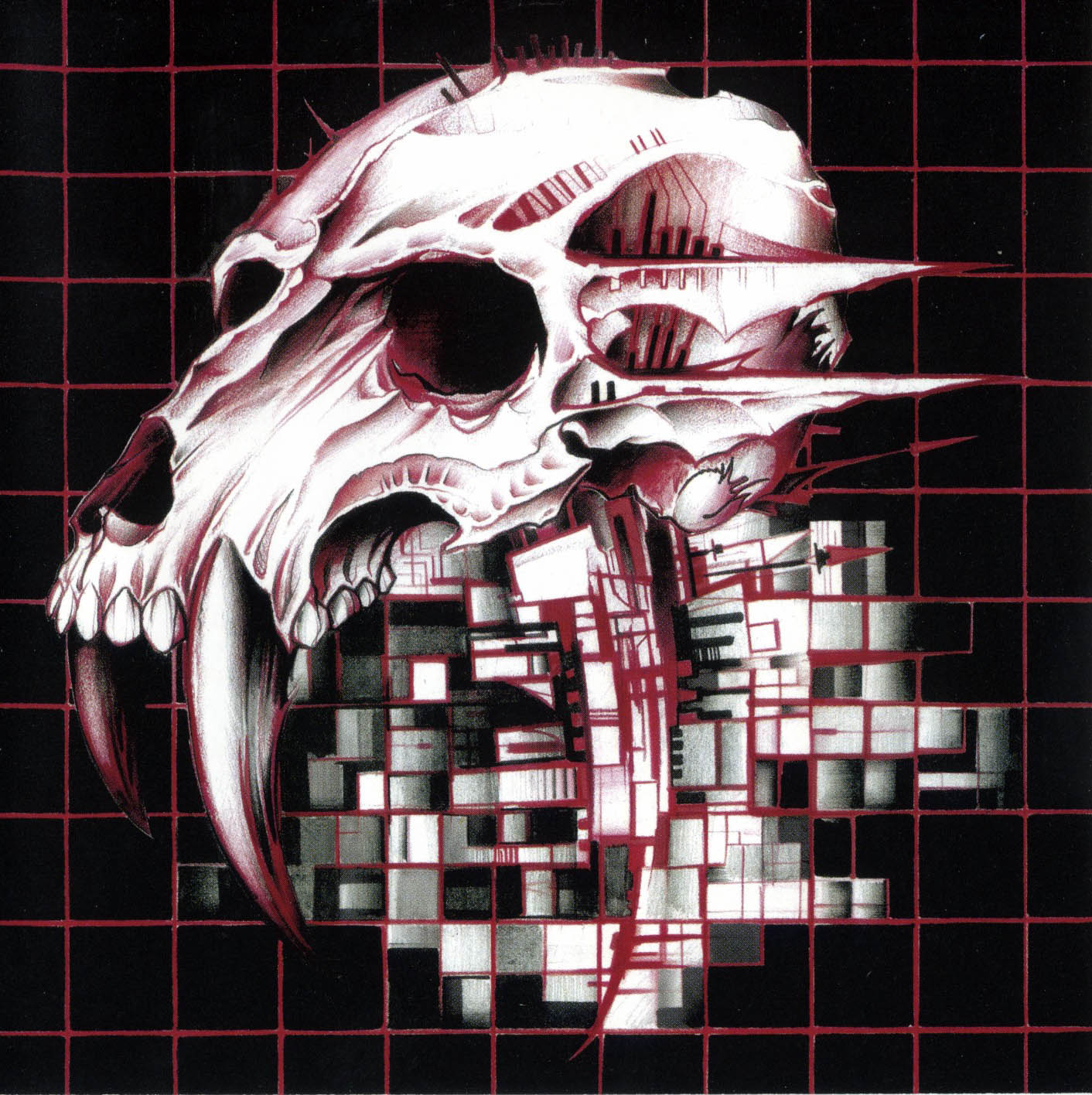
It’s worse than the picture depicts. It’s not just the lovers, the elitists and the evangelists, it’s the sheer range of choice too, beyond the loudest.

What about fresh
Heh. Seems from https://github.com/sinelaw/fresh/releases?page=11#release-v0.1.1 fresh is even newer than fin (by a couple months). … Except their devs didn’t burn out after a month. :D
Didn’t know about it. As with dozens more also not fit into the image.
Why would you need a text editor when you can just do
cat > file?smh
This command will literally overwrite the file that you do whenever you try to edit it. You need two >> to append at the end of a file, but it’s super-duper hard to put text in the middle of a file from the terminal. That is why people use editors, for sure. Now that I think about it, there probably is some psychopath who uses the actual command line as an editor. They’re probably more elitist than Vim users lol.
Sounds like a skill issue tbh
Excuse me, but real programmers use butterflies.
there’s an emacs mode for that
Thinking out loud here. Head in a temp file, cat, tail the rest and then overwrite?
deleted by creator
ed is the standard editor
It has an extremely consistent user interface and error reporting!
?WYGIWYG
And you thought exiting vim was hard. Honestly, I did not know this existed, thanks.
First choice: use a normal damn GUI text editor
Second choice: Nano. It’s simple and comprehensible, and a best CLI choice for newbies. You can then turn to vim, emacs, or whatever, but don’t make your life harder from the get-go
People suggesting to start with Vim are probably the same ones pushing for Arch as a first distro. C’mon.
That’s how you breed scrubs who can’t M-x-butterfly. I say give them a distro that boots into vi and starts a background process that block internet access around them. If they manage to quit vi and kill the daemon, they’re ready for Linux.
Lol
use a normal damn GUI text editor
The right choice as long as you don’t want to edit code/config files. Trust me, writing code inside libre office is not fun.
Libre office isn’t a text editor it’s a document processor; more like a gui for something like TeX, or realisticially html, than a program for reading/editing plain text.
Kate is a basic GUI text editor that can highlight syntax, suggest options and do other things useful for code and configs. Comes with KDE (which is a common newbie recommendation) and is available as Flatpak everywhere else.
But sure, there are instances where you should use CLI text editors. If you need to edit text files as root, this is generally the best option. Also, it’s the only option for headless setups and SSH. For that, nano will do.
Was gonna write that only one true text editor exists. But okay, you are right, of course

Let the editor holy wars (re)start!
Vim is the one true editor, and the heretics who claim otherwise shall be driven forth and sent to
re-educationlinux boot camps to learn the true ways.Comment could have been a :q!
deleted by creator
I’ve only ever seen vim users call for holy wars… I’m happy with my RSI and carpal tunnel syndrome. Emacs till death do me fart.
Now that i think about it, vim users seem to be annoyed by emacs more than the other way around.
I had an instructor once who said that programmers could debate whether to use vim or Emacs, but system administrators should use vim, hands down.
I use Micro in the terminal - it offers good desktop integration with keys similar to DEs like ctrl+v and ctrl+c, rather than being terminal centred (e.g. Ctrl+C is usually the standard interrupt/abort key in the terminal). So it’s nice if you’re mainly in a desktop but pop in to a terminal occasionally and have the DE muscle memory.
I use Kate outside the terminal.
But honestly, which text editor you use depends on what you use it for and how often. Vim is very powerful and allows very fast use & productivity if you learn it properly and probably very useful if you spend a lot of time in the terminal or TTY, but Nano is more straight forward and easy for a lot of basic terminal based work.
I’ve been using micro as well recently. But other than that if I’m on a remote server I’ll use whatever it has available, starting with nano then vi/vim.
I’d look into Fresh if you want to really have the whole gui-style text editor experience inside a TUI application.
Micro also comes with preinstalled LSP support (on Debian+Ubuntu, anyway)!
The so-called desktop integration is what I disable in vim. I want to have the terminal in control and use select text to copy instead of entering visual mode. When I want visual mode, I use my keyboard. (:
My requirements for a text editor:
- it displays ‘A’ when I press the ‘A’ key
- doesn’t require more than 1 minute of learning to use it
Bonus points if it comes pre installed.
Idk it took me 3 attempts to learn (neo)vim, but now every Linux system I SSH in I just go straight for vi(m), because moving around and editing in Nano is just so slow when you’re used to vim keys.
I swear I’m not trying to proselytize. People should use whatever they want, and these discussions are pointless. It’s all just tradeoffs and getting used to things.
So nano, then.
Hah. The text editor I wrote has that covered.
… ignore the bugs.
I install
micro. I intend to usemicro. My fingers typenanoanyways. Every time.Time for an alias!
If you haven’t, I highly recommend checking out Fresh, it’s like micro with even more standard text editor features.
Co-Authored-By: Claude
:(
vi because it’s everywhere, even on servers where packages can’t be downloaded or shouldn’t be installed.
This is my reply every time someone suggests nvim. Is it on the servers I use but I’m not an admin for? No? Then it doesn’t sound like a great option.
My favourite editor is the first one I find that’s installed
I’m a emacs guy, but nano should be the only one installed by default. The default editor should tell you how to exit!

Vim myfile.txt will hiwever not show you that
Not our fault everyone blows past the kind offer of
: vimtutoron startup! (I kid. The default editor shouldn’t require a class.)You’re 100% correct. Nano is a perfectly reasonable default.
That said, it is 2026. It also wouldn’t kill us to default to an interactive one-time prompt that defaults to nano, but offers one or two others, and removes itself after setting the user’s choice.
deleted by creator
Not even Notepad ++? Damn
Notepad++ doesn’t have Notepad’s awesome AI features, clearly
🤮🤮