The right materials on a solid base a road will last forever, just as roman roads, aquaducts, and other structures are still in use today. Stone doesn’t wear all that much, and the concrete the romans used, is still in use now.
Now as far as putting pipes and electrical lines, I would do all of that right the first time, and or leave a tunnel you could change them out in if you have to.
It would be a good use of borrowed money for a change, to build roads that last, as it will save money in the long run in not having to redo them all the time. It would be an even better use of borrowed money to build more freight and passenger rail, especially interstate, but we can’t have nice things I guess the plutocracy is dug into how things are now. We pay more money for less and worse things because people profit off of the way we do it now.
Roman roads did several layers, gravel, and the like, to make sure there was drainage and it was on a solid footing, then they would lock in paving stones with sand trapped around it, the sand has no where to go, same way patios are done in a way, and it lasts forever when it’s done right. They could even make a solid base with a layer that could be changed every once and a while.
Or even better, although this is out there, is make the roads of some kind of cast ceramic with magnatism in there, and build cars to float on the roads with magnatism. That would take all new cars and or drivers to make them compatible, but would be way faster and more efficient.
Yeah, so instead of using semis going 100kph, put the cargo they haul in freit trains … Train tracks last quite a while. And you will get a good rail network out of it as a bonus. And now your roads last longer ! What a treat ;)
They also didn’t have the technology we did, it is pretty self defeating to think we can’t build something that can handle weight, because we don’t already build stuff that can handle weight. Even though they built stuff still in use, obviously we can’t, must be the weight, or else we would.
Yet their concrete is still in use and ours isn’t, even that isn’t under extra load. Maybe we are just cheap and short term? (we are.)
And also they would hold up, because there is nothing to break. If you get it on a solid foundation, stone locked in place with sand and the like, there is no where to go, stone is strong. So is concrete if you make it to be strong.
You can build damn near anything to last a thousand years. Nobody wants to pay for it though, and I mean can you blame them? If you increase the price by an order of magnitude people are going to get cranky.
It’s more expensive rebuilding it a bunch of times than doing it right the first time. We have a shit load of money. And it would be a proper use of borrowed money for a change, investing in something that pays for itself in the long run. As opposed to borrowing to buy tanker ships full of lube to stroke off investors like we do now.
Yeah but you forgot that we live in a world of very short term thinking. The must noticable expressions i are how politicians plan election-to-election and business think quarter-to-quarter and year-over-year. We all do it though. It feeds into credit nightmares for everyone. If people are asked “do you want to/ can you pay $1,000 right now or $120 monthly for 10 months” most will (usually by necessity) take the second option. Now blow that up into the millions for infrastructure. Thus a road that’ll last 500 years become a replac- it-every-50-years problem.
But we are borrowing trillions and trillions to simply buttress businesses, to prevent the rich from losing money in a downturn. In 2008, both parties, then 2020, both parties, borrowed as much as they possibly could. What did we get out of that money? Nothing, the rich have never been richer, working people got dick. PPP loans were forced to be paid back by small companies that kept people on, the big corporations got exponentially more of it, laid off people anyway, and had those loans forgiven, because they knew whom to bribe I presume.
It’s not going to get better, but instead of borrowing to subsidize the profits of the rich, and to prevent companies from losing money, how about we borrow to actually do things. To build stuff, to build our prestige, to give jobs to people, and to make us more competitive. Roads that never have to be rebuilt, they could have snow melting built into them. We could bury really solid electrical and sewer and fiber optics in tunnels beneath them while we are at it.
Even better, we could build an interstate freight and passenger rail. While the eminent domain would be a nightmare, it has to be done, and we have defunct lines all around the country we can reboot. Except instead of making it private, we could make a sort of benefit corporation to operate it. One where investors get a reasonable return, but they have other reasons for being other than maximizing revenue, providing the good service at cost plus 5 percent or something, 8 percent tops maybe.
We could sell bonds to do it, the benefit corporations to run them, whose mission is mainly to provide that service. I am getting real pie in the sky here, not a fucking chance we do that. Democrats are too weak, and would only even think about such a thing if the republicans gave them permission first and tried to do it. They won’t either. The roads would be an easier thing to ease into a little bit even with our, ahem, government.
But a WPA, Works projects Administration, like in the great depression, that trains people for jobs, in building these projects for the common good while providing good solid jobs to people. Forget saving those big companies, let them fail, it’s not capitalism if they don’t fail when they fail, it’s a type of communism when losses are socialized in a system where those rich control the government and are above the law, and it’s fun to call them communists. Try it, it’s fun. It also throws them for a loop.
We bail out workers, not companies. We hook up workers that lose their jobs with some benefits, we give millions of other workers jobs to build stuff we need, that will save us money, and that builds our prestige, and makes us more competitive, and we let gigantic corporations fail. And we still save money, directly from what it takes to save the rich, and indirectly in not having those same rich bleeding us, not paying taxes, and of course perverting our politicians. Pie in the sky I know, if you wanted to tallk about what can get through this government, I think it would be a very short conversation no? Nothing new, if they change/build anything new it will be privately owned. They are trying to privatize roads, pay to play.
Expose those Roman road designs to today’s vehicle loads, frequency, and speed and they won’t last long either.
As for getting utility sizing right forever so that they never have to be dug up again, that’s highly impractical as communities change - they grow, shrink, densify. Industries can move in and out of an area changing demand. Regulations change. Water mains and sewers age and fail and are replaced on a schedule. When new service connections are added, workers have to get to the main. And if they’re in a tunnel large enough for workers and equipment to remove and replace utilities, we’re talking a subway tunnel under every road and large access points every thousand or so feet. Tunnels will also deteriorate, flood, etc.
I disagree, and condemn your assumption that things are done the best way already. Despite everything, you still trust the authorities, in business and government. You do not see the possible as a result, you shun new ways of doing things, because you trust authority. I think it’s a baaaaaad philosophy myself.

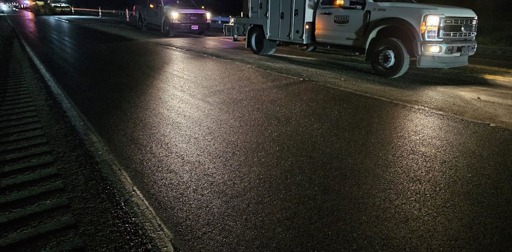
The right materials on a solid base a road will last forever, just as roman roads, aquaducts, and other structures are still in use today. Stone doesn’t wear all that much, and the concrete the romans used, is still in use now.
Now as far as putting pipes and electrical lines, I would do all of that right the first time, and or leave a tunnel you could change them out in if you have to.
It would be a good use of borrowed money for a change, to build roads that last, as it will save money in the long run in not having to redo them all the time. It would be an even better use of borrowed money to build more freight and passenger rail, especially interstate, but we can’t have nice things I guess the plutocracy is dug into how things are now. We pay more money for less and worse things because people profit off of the way we do it now.
Roman roads did several layers, gravel, and the like, to make sure there was drainage and it was on a solid footing, then they would lock in paving stones with sand trapped around it, the sand has no where to go, same way patios are done in a way, and it lasts forever when it’s done right. They could even make a solid base with a layer that could be changed every once and a while.
Or even better, although this is out there, is make the roads of some kind of cast ceramic with magnatism in there, and build cars to float on the roads with magnatism. That would take all new cars and or drivers to make them compatible, but would be way faster and more efficient.
Roman roads didnt have fleets of semi’s driving over them at 100+ kph every day. Do that for a few years on a Roman road and see how well it holds up
Yeah, so instead of using semis going 100kph, put the cargo they haul in freit trains … Train tracks last quite a while. And you will get a good rail network out of it as a bonus. And now your roads last longer ! What a treat ;)
That’s awesome and outside the scope of changing the building material for roads.
Fair enough, i might have slid off topic somewhat XD
They also didn’t have the technology we did, it is pretty self defeating to think we can’t build something that can handle weight, because we don’t already build stuff that can handle weight. Even though they built stuff still in use, obviously we can’t, must be the weight, or else we would.
Yet their concrete is still in use and ours isn’t, even that isn’t under extra load. Maybe we are just cheap and short term? (we are.)
And also they would hold up, because there is nothing to break. If you get it on a solid foundation, stone locked in place with sand and the like, there is no where to go, stone is strong. So is concrete if you make it to be strong.
You can build damn near anything to last a thousand years. Nobody wants to pay for it though, and I mean can you blame them? If you increase the price by an order of magnitude people are going to get cranky.
It’s more expensive rebuilding it a bunch of times than doing it right the first time. We have a shit load of money. And it would be a proper use of borrowed money for a change, investing in something that pays for itself in the long run. As opposed to borrowing to buy tanker ships full of lube to stroke off investors like we do now.
Yeah but you forgot that we live in a world of very short term thinking. The must noticable expressions i are how politicians plan election-to-election and business think quarter-to-quarter and year-over-year. We all do it though. It feeds into credit nightmares for everyone. If people are asked “do you want to/ can you pay $1,000 right now or $120 monthly for 10 months” most will (usually by necessity) take the second option. Now blow that up into the millions for infrastructure. Thus a road that’ll last 500 years become a replac- it-every-50-years problem.
But we are borrowing trillions and trillions to simply buttress businesses, to prevent the rich from losing money in a downturn. In 2008, both parties, then 2020, both parties, borrowed as much as they possibly could. What did we get out of that money? Nothing, the rich have never been richer, working people got dick. PPP loans were forced to be paid back by small companies that kept people on, the big corporations got exponentially more of it, laid off people anyway, and had those loans forgiven, because they knew whom to bribe I presume.
It’s not going to get better, but instead of borrowing to subsidize the profits of the rich, and to prevent companies from losing money, how about we borrow to actually do things. To build stuff, to build our prestige, to give jobs to people, and to make us more competitive. Roads that never have to be rebuilt, they could have snow melting built into them. We could bury really solid electrical and sewer and fiber optics in tunnels beneath them while we are at it.
Even better, we could build an interstate freight and passenger rail. While the eminent domain would be a nightmare, it has to be done, and we have defunct lines all around the country we can reboot. Except instead of making it private, we could make a sort of benefit corporation to operate it. One where investors get a reasonable return, but they have other reasons for being other than maximizing revenue, providing the good service at cost plus 5 percent or something, 8 percent tops maybe.
We could sell bonds to do it, the benefit corporations to run them, whose mission is mainly to provide that service. I am getting real pie in the sky here, not a fucking chance we do that. Democrats are too weak, and would only even think about such a thing if the republicans gave them permission first and tried to do it. They won’t either. The roads would be an easier thing to ease into a little bit even with our, ahem, government.
But a WPA, Works projects Administration, like in the great depression, that trains people for jobs, in building these projects for the common good while providing good solid jobs to people. Forget saving those big companies, let them fail, it’s not capitalism if they don’t fail when they fail, it’s a type of communism when losses are socialized in a system where those rich control the government and are above the law, and it’s fun to call them communists. Try it, it’s fun. It also throws them for a loop.
We bail out workers, not companies. We hook up workers that lose their jobs with some benefits, we give millions of other workers jobs to build stuff we need, that will save us money, and that builds our prestige, and makes us more competitive, and we let gigantic corporations fail. And we still save money, directly from what it takes to save the rich, and indirectly in not having those same rich bleeding us, not paying taxes, and of course perverting our politicians. Pie in the sky I know, if you wanted to tallk about what can get through this government, I think it would be a very short conversation no? Nothing new, if they change/build anything new it will be privately owned. They are trying to privatize roads, pay to play.
Expose those Roman road designs to today’s vehicle loads, frequency, and speed and they won’t last long either.
As for getting utility sizing right forever so that they never have to be dug up again, that’s highly impractical as communities change - they grow, shrink, densify. Industries can move in and out of an area changing demand. Regulations change. Water mains and sewers age and fail and are replaced on a schedule. When new service connections are added, workers have to get to the main. And if they’re in a tunnel large enough for workers and equipment to remove and replace utilities, we’re talking a subway tunnel under every road and large access points every thousand or so feet. Tunnels will also deteriorate, flood, etc.
I disagree, and condemn your assumption that things are done the best way already. Despite everything, you still trust the authorities, in business and government. You do not see the possible as a result, you shun new ways of doing things, because you trust authority. I think it’s a baaaaaad philosophy myself.