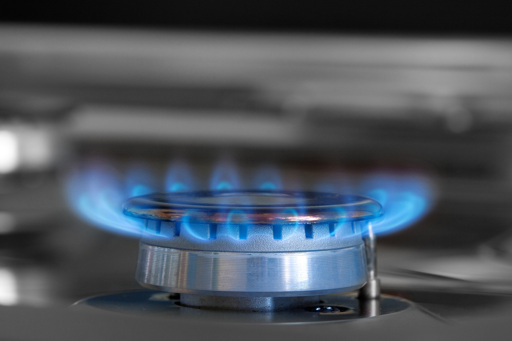
I used to prefer gas ranges. I grew up with one and really liked that we could still cook when the power was out. Also, fire. I just… kinda like fire.
But learning about the dangers has changed my view. Funny enough, I recently moved into a new place and have an electric stove for the first time. My heart is upset at me, but I can’t deny that it’s better. Not only are there fewer dangers, but it seems to heat up really fast. Much faster than any of the gas stoves I’ve used (which have been in almost every house and apartment that I’ve lived in til now.) I set a pot to boil, go sit down, and it’s bubbling before the YouTuber I’m watching finishes gargling their sponsor’s balls.
(Kidding, of course. I always skip the sponsor placement.)
Induction tops are the best. Instant heat, very safe and energy efficient. Not compatible with cheap non magnetic cookware though.
I fucking hated the induction stove we had in the 90s, and awe moved into a place with a very nice gas range. One of them rich people brands. And I’m a food snob. Well okay I was before I wokenboken. It’s going to be hard to convince me.
In the 90s you probably had one of those shitty glass top coil element stoves. Those things suck. Induction is great. Maybe there was some old tech out there but I love mine
Not sure if induction stoves existed back then.
Do you recall if it got hot with no pot on it?
If it got hot with nothing on it, it was not an induction top, but a normal electric one with glass on top.
It’s going to be hard to convince me.
I don’t think anybody wants to convince you, it’s your own choice.
The fact you didn’t reply to any of the replies here makes me think you’re not capable of having your mind changed.
Or I had other shit to do than be on the internet, but you do you King
Sorry, yeah this is fair. I did not read the timestamps properly.
I think a big part of the issue is the wild variances on electric stove quality.
The landlord specials are dogshit and what most people have experience with. Even a bad gas stove is 10x better than those.
But once you get to quality electric ranges, and then induction options, they are superior to gas in basically every way. But very few people have experience with these, or the money to afford upgrading to them when their existing stoves breakdown unexpectedly. So most are stuck with the cheap crappy electric options.
See this explains my experience. Shitty induction range and expensive gas range. Like, if I had a jennair induction to compare to I could make an intelligent analysis but as is I fucking love gas ranges. Very easy to see what you’re getting as far as heat.
Fwiw my induction range has blue LEDs built into the glass top so so can see when the big burner is on. I thought it was a stupid gimmick, but it really makes a nice stand-in for that flame
I’ve got a higher range induction and there are worlds between that and the run of the mill portable induction stove I bought for cooking smelly/smoky stuff outside. So much so that I prefer the 80’s electric hot plate of my mother.
That mobile induction abomination regulates like a microwave: full blast or nothing (in much too long pulses). Cooking on that is a challenge. My stovetop tho goes from just hand warm (keep warm function) to the fires of mount doom in 17 silky smooth steps. I could hardly believe my eyes when it boiled pasta water faster than my electric kettle. As nice as cooking is with that, the biggest advantage is the cleaning…
I will never own another Jenn-Air. We had one for a brief period of time. It tried it’s best to burn the house down 3 times by shorting out 2 twice and having the thermocouple induce a runaway the last time.
Full size entry level induction is in the 200-300 € range nowadays and already beats gas stoves. Just check your nearest IKEA. There is ZERO reason resistive stoves should still be allowed for sale. NONE. The idea that “induction” is a premium offering is a complete myth and has been for years.
I grew up with one and really liked that we could still cook when the power was out
Is this a north america joke I’m too European to understand? I heard America gets power outages but surely they are not frequent enough this would be something influencing what stove you buy
Summer thunderstorms will knock out power, especially in the Midwest where tornadoes are common.
Fascinating, where I’m from power outages are a once in a lifetime occurrence. I’ve never experienced one
It’s called disaster preparedness
In Pornhub, gargling the balls is the content. It’s all about context… condoms.
There are two kinds of studies I really enjoy. 1. Some wildly unexpected result in a classic field. Rare. 2. Quantification of some phenomenon in greater detail, which confirms current understanding. Happens all the time. Love it the most.
Integrating indoor and outdoor nitrogen dioxide exposures in US homes nationally by ZIP code https://academic.oup.com/pnasnexus/article/4/12/pgaf341/8361964?login=false
Switching to electric stoves can dramatically cut indoor air pollution https://news.stanford.edu/stories/2025/12/gas-propane-stoves-nitrogen-dioxide-exposure-health-risks-switching-electric
Induction stoves should be Mandatory in mew construction. Coil electric works just fine but we need to introduce people to tech that’s superior to gas to get the switch to stick
mew construction
User name checks out.
I got an induction maybe 10 years ago or so. It is amazing how fast I can boil water or just get going in general. Lovely tech
I think that electric cooking speed is only limited by how much power you can draw from your wiring. And if you have good wiring, cooking speeds can be extremely fast. It’s a bit like with cars, where people get excited about having a lot of HP (horse power) where idk (i’m not a car expert) sth like 100 HP is considered “crazy good” and everybody wants to have it (that’s combustion engine cars). Then, an electric vehicle comes across the corner (and it’s not even an expensive EV, just a cheap one) and it easily has 700 HP. Like, the acceleration power is immense, it’s enormous. EVs accelerate crazy fast, and it would actually be dangerously powerful if they didn’t have software control to throttle the maximum engine power.
Suddenly, everybody stopped talking about HP. All these car-crazy friends i had when i was in school, the moment EVs appeared on the stage, they stopped being impressed by HP.
The same is with electric appliances like cooking stoves. They can be crazy fast and there’s no upper limit on power if you get good wiring. It’s only limited by the device so you don’t accidentally burn your food all the time.
I think that with gas flames, the flames are more-or-less always the same size, while for electric cooking, there’s a much greater range in heating power, both up and down. You can also have very small, very gentle heating, that is difficult to get with gas.
Modern electric heaters are also superior to gas in any way. And yeah, induction is just a new level of superiority.
I don’t get why there’s such a huge push from self-declared “left-wing” people to prescribe others what to do. Supposedly, “left-wing” people don’t like being told what to do, i.e. by employers (who are making them work in bad ways) or by “main-stream dominant right-wing culture”. At the same time, the very same people who don’t like being told what to do, tell others what to do. Such as by wanting to force everyone to switch to a specific type of technology that’s supposedly superior. I don’t get this behavior.
Renters don’t get a choice, and pollution affects everyone
renters don’t get a choice in practice, but they should in theory, and pollution from gas stoves is less than from combustion cars, just that it’s densely concentrated in your apartment, so levels are still high for you. but it does not affect everyone
a better move would be to actually build social housing, instead of prescribing others what they should build. otherwise you’re simply seen as “the party that wants to forbid others from doing what they like”, instead of being seen as “the party that actually does some meaningful construction and adds to society that way”.
We shouldn’t create decades of priced in emissions or have to pau twice to rip out the gas and put in electric later. Might as well do it right the first time
If you have a gas stove and can’t afford, or don’t want to switch to electric, keep a window open in the kitchen while you cook. This is especially important if your over-the-range hood does not vent to the outside (yes, that’s a thing.) If your hood does vent to the outside, turn it on every time you cook and you’re golden.
Where the fuck else can it vent to?
Through an activated charcoal filter and right back into your face.
This is depressingly common and functionally accomplishes just about as much as you expect it does.
Ohhh, thanks. With the right filter it can make sense but it will be far cheaper to just pipe it out.
Not just the right filter but a strong enough fan motor to draw air through it. The filter needs to be changed so at some point outside venting becomes cheaper.
The reality is most people never change the filter and rarely use the fan.
Yeah, I’m going to open a window every time I want to fry a couple of eggs or bake a loaf of bread at -25F/-32C.
Just how many hours a day do you think any stove is continuously on? That 3D printer you might own runs far, far longer.
If you don’t want to poison yourself with fumes, then yes.
Then you must only breathe the finest purified filtered canned air. And not the dirty polluted air in whatever big city you live in.
I actually have more air quality measures in my home than most and I have multiple sensors measuring the quality of the air. I be been measuring it long enough to know exactly what causes my air quality to decrease.
I also do not live in or near a big city.
Your ignorance is not equal to my knowledge situation. I wouldn’t expect a willfully ignorant person to believe this.
I wish someone pointed this out 20 years ago (enough to be heard). I raised two kids with occasional asthma in a house with gas stove, and maybe that could have been different.
I recently converted from gas to induction, and find it a much better cooking appliance in every way. Pans on the stovetop heat up faster than with gas, and I can boil a pot of water faster. The oven has more options and more consistent heating, especially on the broiler.
The only problem was the cost. Way too much money to get a new circuit installed but also the range was double or more what I would have spent on gas. There were very few options at appliance stores, and I never did find one on display, of any brand. In the US, it’s unnecessarily difficult to make this switch.
When I was shopping for one I was told to pay attention to coil sizes. Sure enough experimenting with a large skillet on small coil shows very uneven heating. I did find one or two reasonable priced ranges but with only tiny coils. Even at spending way too much, I only have one coil that works well with 12” skillet or stock pot. I know ikea now sells an induction range for more reasonable price but coil size is critical and the first thing I’d look at
Having a proper exhaust hood that sucks air outside mitigates this to a huge degree, but a lot of us have hoods that “filter” the air through nothing and then shoot it up towards the ceiling.
The flippers who did my house disconnected the outside air vent, I’m still pissed and mean to get it fixed, cause I can’t afford an induction range either.
As a taller guy who wears glasses, I’ve had the horrible experience of some of these filters blowing greasy air in my face and settling on my glasses. Not pleasant
Mine has a vent, but no hood so there’s only so much it can do. And the way they built out the kitchen means there’s no good way to install a hood without remodelling.
But now I don’t care as much. The current vent (and window) is good enough for induction
If you think you can’t afford an induction range, you also can’t afford to hire contractors to have your new ductwork put in and/or unborked.
Much as I hate to recommend Frigidaire for various reasons, the FCFI3083AS is I think the most economical freestanding 30" induction range on the market at the moment and has an MSRP of $1099. You can probably score one from some discount or independent appliance retailers (i.e. not Home Depot, Lowes, or Best Buy) for a little under a thousand.
A lot of us
Everyone I know has a microwave. Is that a class thing?
It’s a failure to read the manual thing. Every OTR microwave ever manufactured functions as a hood by definition, and basically all of them (I can only think of like two exceptions) have the option to be configured for either recirculation or to duct outside. It’s just that most models come out of the box already configured for recirculation and most people ('s contractors) are so averse to reading that they fail to realize you can flip the blower motor over and thus cause it to actually accomplish something (provided a duct is in place) rather than just blowing stale air back in your face.
The ducting behind a microwave is not that common in my experience. It makes sense for microwaves to come preconfigured to recirculate instead of trying to exhaust to a sheet of drywall because most people are going to install it how it comes out of the box. I’ve installed dozens of microwaves and only twice has ducting existed to flip the venting for. Higher end houses typically have dedicated exhaust fans and lower end houses never seem to have ducting for a microwave. I installed a dedicated fan that exhausts out the roof at my house. Even with ducting those microwave exhaust fans barely provide anything of value. I’m sure my experience is very regional but it seems like a really niche middle ground where someone would bother venting out of the kitchen but also not care enough to have a purpose built exhaust fan.
Part of the problem there is I have guys just absolutely insist at me that a microwave “can’t” be vented outside so they don’t bother to install a duct, and tell me that in order to vent outside you “have” to get a hood instead. This is obviously bogus.
This also leads to the inevitable Contractor Special where a duct was there, often when the user is replacing an old hood with a microwave, but the installer just shrugs and slaps the microwave on the wall as-is where A) it is inevitably too tall and now way too close to the stovetop, and B) covering the duct outlet while still recirculating back into the room. Whenever I unearth one of these in my travels it makes me want to track down whoever the hell installed it and then punch them so hard they come clean out of their socks.
People are for some reason hyperfixated on getting appliances off of their countertops, which is why the over-the-range microwaves became so prevalent in the first place. (And then they all immediately filled the spot where their countertop microwave used to be with a countertop air fryer instead, but that’s a whole different discussion.)
Yeah that would drive me insane to run across. It’s not even particularly hard to tell that the exhaust fan motor is reversible just by looking at the top/back of the microwave before it is installed. Every one I’ve seen looks pretty damn modular in comparison to the rest of the microwave shell.
Edit: reversible is the wrong word, able to be unscrewed and rotated, I’m sure you know what I meant but on a reread of my comment I wanted to clarify.
I have gas and would fight anyone who tries to tell me otherwise. I rented a place with an induction range and now I want one so bad.
(I only read the title)
Pretty damn obvious. Yes, it needed to be tested and verified experimentally, but… well, I really mean no offense, but why is this worth sharing?
Because a lot of people assume that everything is fine with things that have been around forever. They need a heads up or a reminder that it isn’t the case.
More like researches need to constantly publish. If they take up too much time with some big project they will lose funding as non productive scholar. That’s why we have so much bullshit papers saying “water is wet”. Publish or perish.
eh…if you want the horde to adopt something you need to put a reference to it in a popular movie/show. not an ad but like…some kind of plotline where someone blows up their house/dies via gas-stove.
and of course…make it cheap, majority of america lives paycheck to paycheck…when your living paycheck to paycheck the only thing that matters (especially in the US, with it’s lack of basic social safety nets) is $
only the nerdiest of nerds reads at all, let alone reads research publications.
Speaking as a board member in a housing community where we are actively dealing with residents who claim that their precious gas stoves are safe and they don’t want electric replacements, I appreciate this post being shared.
People are so fucking weird! Like yeah instant heat is nice, but induction cook tops do it without poisoning your lungs. But people (conservatives) will claim it’s superior in some way or another in order to be a contrarian.
Fuck em, let them suffocate.
Edit: and some non conservative lemmy users.
Induction can also boil water much faster than gas ever could. And to be honest, as much hate as they get, I would even prefer non-induction electric over gas at this point.
I really wish I could get them to work properly, but my moka pot doesn’t boil properly on a standard electric coil stove. Mine (hot plate) cycles on and off (at maximum heat and off rather than some intermediate temperature) causing inconsistent heating through the boiling cycle, making bad coffee.
I was raised with the coil guys. And even if it didn’t release nitrous byproducts, just the safety factor of an electric stove being <<< than gas to blow up.
deleted by creator
Tl;dr: electric is better.
I’m in the EU. “Range” is a cooktop plus oven, right?
We got rid of out old gas appliance and bought an induction top and an electric oven.
They both cost as much as the gas stove, so double the price. Running them costs about the same.
But induction is just so easy and quick! Setting the time for eggs, getting water to boil in seconds… It’s truly next level.
The oven is just alright, maybe heats more evenly with the fan.
Other than that? I guess no danger of explosions. No yearly checkups.
I like it much more, and wouldn’t go back.
deleted by creator
Yes, the US is different. My range has a normal 220V plug, and a simple menu to set the maximum wattage it’s allowed to draw…
most US stoves use 220v as well.
Range is the top part. Oven is the box. Stove is the whole thing.
But if you mix them up everyone will still know what you mean.
That’s a significantly larger gap than what I see here at my local Lowe’s. We have electric and gas stoves both about $550 at the cheapest. The gas one is $10 cheaper, not much of a price point. The induction one is $850 at the cheapest, so about 55% more expensive. That’s definitely not the 3x cost difference you see here.
I can only get close to those numbers you quote by selecting a high-end induction stoves. They don’t sell gas range or oven only for less, but I could see that being a cheaper alternative. Also, their search is weird and I had to specify gas to find gas stoves.
They sell single induction tops for like $50.
You mean hot plates?
No.
Curious, when did you last need an oven with flame heating?
deleted by creator
Sorry I was drinking last night. I was asking when you needed the enclosed space to be heated up fast, like a gas stove would.
It took decades of propaganda. Paying off cooking shows and influencers to have big, obvious gas stoves. They even popularized the phrase “cooking with gas” as a euphemism for anything fast. If it was so much better, it would have sold its self.
But people (conservatives) will claim it’s superior in some way or another in order to be a contrarian.
no, that’s not the reason. induction stoves are really only around for a couple years, IIRC, and old electric stoves simply weren’t that great. they were mostly slow. gas, you turned on and had heat. electric meant that you had to wait for the glass pane to heat up below your cooking gear. on top of that, gas was typically cheaper than electric.
that’s really only changing now, where renewable energy provides cheap electricity, while gas prices are increasing due to international situation. it simply takes a while for the news to spread, and not everybody has gotten the news yet. renewable energy will be much cheaper than gas in the long run, thanks to solar energy, and that’s a news that really only started being economically meaningful around 2 years ago. It simply takes a long time for the news to go around and everybody hear it.
Are you forcing people to switch to electric stoves? Are you buying the stoves for them and installing them?
Also, simply opening a window while cooking, and/or keeping a hood that vents to the outside turned on, makes them safe to use.
No, we don’t force anyone to do anything, electric replacements are offered as a “free” upgrade. We’re a housing cooperative, so technically it’s not free, but it’s paid for by the community’s collective funds.
The other main problem is that people routinely forget to turn off their stoves. We’ve had the fire department come multiple times this year alone because someone left their gas on and filled their unit with it. One resident left his gas open for who knows how long before he passed out in his living room and shit himself. Luckily someone found him and called the paramedics.
I guess if it was one person living in the wilderness and they blew themselves up or suffocated, then that’s on them. In a community though, it endangers everyone nearby.
Gas is not safe.
The other main problem is that people routinely forget to turn off their stoves.
that is nightmare level stuff
I monitored my indoor air quality prior to getting rid of my gas stove and even with windows open, the levels of the monitored pollutants skyrocket when the stove or oven was going. Maybe if you had a box fan blowing in/out for a long time after you finish you’d be ok, but that’s not ideal if you’re heating/cooling your place.
I wouldn’t claim either of those things.
However I will tell you my experience. People in these threads will always tell you that induction is better than gas. That might be true, but as a renter I’ll never know it. Gas is better to cook on than the coil electric stoves which is what I always get in a rental. No landlord is going to spend the extra on an induction cooktop when a coil electric is one of the cheapest options.
I understand that, I’ve lived with gas ovens most of the time as well. Interestingly, the studio I just moved into (which is freshly converted from a garage) has a new fridge and an electric flat-top range. But I rent from a lone guy, not from a standardized apartment community. So maybe that’s why he invested in the good stuff. Renovating an entire complex is way pricier than setting up a single apartment.
I also think I just got lucky. It’s not a perfect place - the insulation sucks, there are paint flecks on the floor and kitchen cabinets, the shower hot/cold are backwards (which confused the hell out of me at first. I thought my hot water wasn’t working) and I saw a mouse recently. But I can’t complain, because the landlord is responsive and the good appliances help balance out the negatives.
There is pushback from some on the right that want fossil fuels piped to every residence.
some cities/states have government mandated rules requiring gas to every home. normally some dinosaur provision before the advent of electrical appliances, to insure new-builds had heat and stuff for winter (landlords have always been cheap SOB’s). and sometimes that comes with a state-mandated gas monopoly (rarely a properly public-funded venture…normally some scummy price gouging company)
some even have some bullshit where you have to pay the gas-company anyway for your electrical appliances, through some equivalency-meter type shit (i assume that stuff was just
lobbiedbribed for by the gas companies)And there was huge pushback a couple years ago when a few places wanted to change that - new construction must be electric only. While I can see builders like to be cheap, anything moderately expensive should be able to get heat pumps and induction at no real cost difference to gas
Switching can be expensive, but doing the right thing on construction much less so. We now have a bunch of new infrastructure/technology we’ll expect our future houses to have, and it’s past time we started doing so on new construction, where it’s much cheaper than converting
Because there are billions of people worldwide for whom this fact is unknown.
Yes, it needed to be tested and verified experimentally…why is this worth sharing?
Glances at community name
Smh
We replaced our gas stove with induction and our water heater with an electric one this past year and disconnected the gas. Now our solar panels offset a lot of the cost of electricity and our main bill is for water.
Happy with an induction cooktop, it boils water quicker and is easier to keep clean. My only concern is someone dropping a heavy pot onto the glass surface.
Your main bill is for WATER?? Maybe this is because water in Spain is subsidized, but may I ask how much water you use per month?
We averaged 1800 litres a day according to our last bill, but it’s summer here in Australia so the reticulation for the garden is on and the pool needs to be topped up because of evaporation.
Our last bill showed an average of 763 litres a day usage so that would represent the cooler months.
real men use diesel stoves
I just keep a lump of sub-critical plutonium in the kitchen.
A quality electric makes a big difference fwiw. I’ve gone through several types depending on where I lived. I gotta admit that gas is my favorite to cook on. Just so many ways to control heat, where the heat is, and how quickly the heat can be changed. Most electric cooktops and ovens are shit unless you buy an upper tier brand, and even then heating a big coil under a glass top is inefficient AF.
Just switched to induction. While not the same as gas, and it does have a few peculiarities, it is by far better than standard electric cooktops. Way fast, more efficient, easy. These need to come down in price to help win over people used to gas.
I have found gas consistently shit for cooking at low temperatures because you can’t turn it down low enough. Minimum power on the lowest ring, nope, still far too hot right in the middle of the pan.
So put the pan on the edge of the burner…
Now the edge burns instead, while the other side remains cold. How is this helping?
Seems like a pretty shitty gas stove, to be honest.
Sounds to me like you need better pans that don’t have paper thin ass bottoms
Guess I was lucky? Our burner had a very low setting, perfect for low heat and reducing things like jams or whatever.
Electric is horrible. It’s either full on or off. No moderation other than time.
Huh, never seen an electric cooker that is full on/off. That sounds terrible.
Yeah, a good number of electrics do that. 100% or 0%, and they pulse between the two.
I think the core thing I have learned is getting a decent gas stove is easy. But it’s real easy to get a shit electric.
As a foil: I grew up with an electric oven. Used an electric ofen through the 70s, 80s, 90s, 00s, and finally got a gas oven in 2017.
Because I was concerned about gas in the home, methane, CO, etc. I invested in a bunch of sensors so I’d know the moment any of it became an issue.
It’s been almost 9 years now, and I’ve yet to experience an issue.
However, that whole “you can use it when the power’s out” thing: can’t use the oven; the valve is electric. On my first gas range, the range wouldn’t even come on without electricity.
The pots and pans I use now are designed for gas and heat up fast, maintain an even heat, and cool down fast.
Essentially, I think not all devices are created equal.
I like not depending on a single utility for my energy needs, but at the same time wouldn’t shed a tear if methane production vanished tomorrow (I’d probably convert to propane short term and electric long-term).
What metrics did you monitor? With my air quality monitor I’d see CO2, particulate, nox skyrocket in rooms even far away from the gas stove. If you got a carbon monoxide detector + explosive gas detector then yeah you wouldn’t get any alarms with normal use, but those aren’t the only pollutants to monitor.
Co2, CO, particulates, NO2 and volatile organics.
I guess it’s down to venting?
I like not depending on a single utility for my energy needs
We had an extended outage in our neighborhood. Just over a week. I let the neighbors know I had enough wood and charcoal to keep the smoker at 275 all week and we could pop on the propane grills if we needed something hotter (I have been blessed with an abundance of backyard cookery). Fed half the neighborhood at some point that week, everyone at least got some ribs.
Last thing I want the folk on my street to do is go hungry, especially if all what’s wrong is the electricity.
Did any of those sensors measure nitrogen dioxide?
Yes, actually. I can see the level go up slightly when the burners go on, but when the ventilation fan kicks in, the levels go back down almost immediately.
Yeah that’s why. Most people don’t have a real vent in their homes. It’s the recirculating one or nothing.
That’s what should actually be illegal. I see those everywhere now, and I can’t believe they were ever allowed. Mine is bad enough as a ceiling vent without hood but at least it does vent outside
One unexpected change with induction is the handles of my cast iron skillets take much longer to get hot. If I cook something relatively fast, like an egg, I can now pick up the cast iron bare handed!
But if I wanted to cook during a power outage, I have a propane grill.
Actually, it’s kind of amusing that my main grill is a pellet grill with powered auger to feed the pellets, so I can’t use that in a power outage
Staying indoors during rain can dramatically cut wetness.
It also seems safer to only attach each house to one sort of potentially deadly infrastructure.
Can we choose because I vote geothermal
I was thinking of the electrical grid :-) And then heating with heat exchange either to air or to ground, which of course also requires electrical power.
Edit: Unless you want to go autonomous with regards to electrical power. Then the energy storage would become the potentially deadly local infrastructure, I suppose.
Sign me up for the fusion reactor
plus electricity is crazy flexible. you can easily transform electric power into other types of power, such as mechanical power (rotary movement), lighting, heat, computation.
with gas, you can only really turn it into heat. for all other uses, you’d first have to translate it into electric power or use a very bulky combustion engine.
I’d rather have health than maybe marginally better cooking experiences
It’s not marginally. It’s a superior all issues aside.
Gas? What are you talking about?
Yeah gas is amazing.
Gas is dogshit. You’ve never used induction.
I have. You haven’t used a proper gas stove.
LOL if you have to get a “proper” stove to beat a 49$ IKEA portable induction cooktop, you’ve already lost.
GTFOH with your bullshit. Gas. FFS.
Wow calm there buddy. Ask any chef and they’ll tell you why the use gas. Inductions… a fancy gimmick if you have a good set of pots. Try using a wok on an induction stove 🤣
Having a gas stove certainly came in handy when we’ve had blackouts.
Electricity is expensive in my state but gas is relatively cheap.
get a camping stove for those occasions. I was worried about the same, that’s what I did.

you don’t say, captain obvious is on it again today
but i guess it’s nice that we now have quantitative data on it